
Phone Scams Targeting Seniors in Canada: 5 Warning Signs and What to Do Next
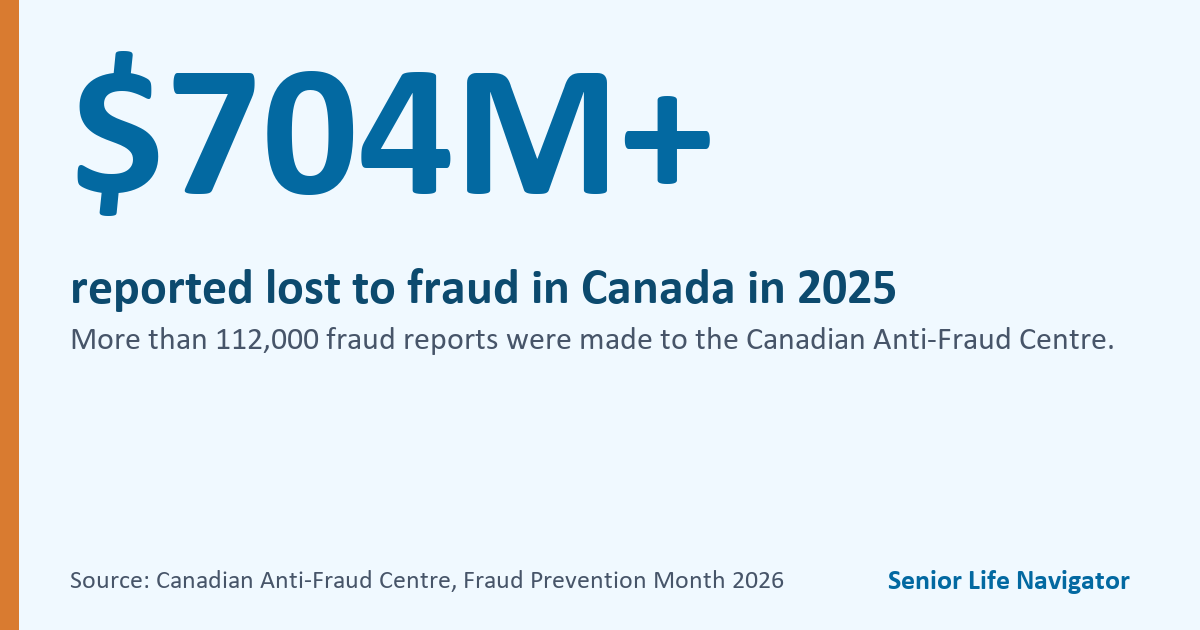
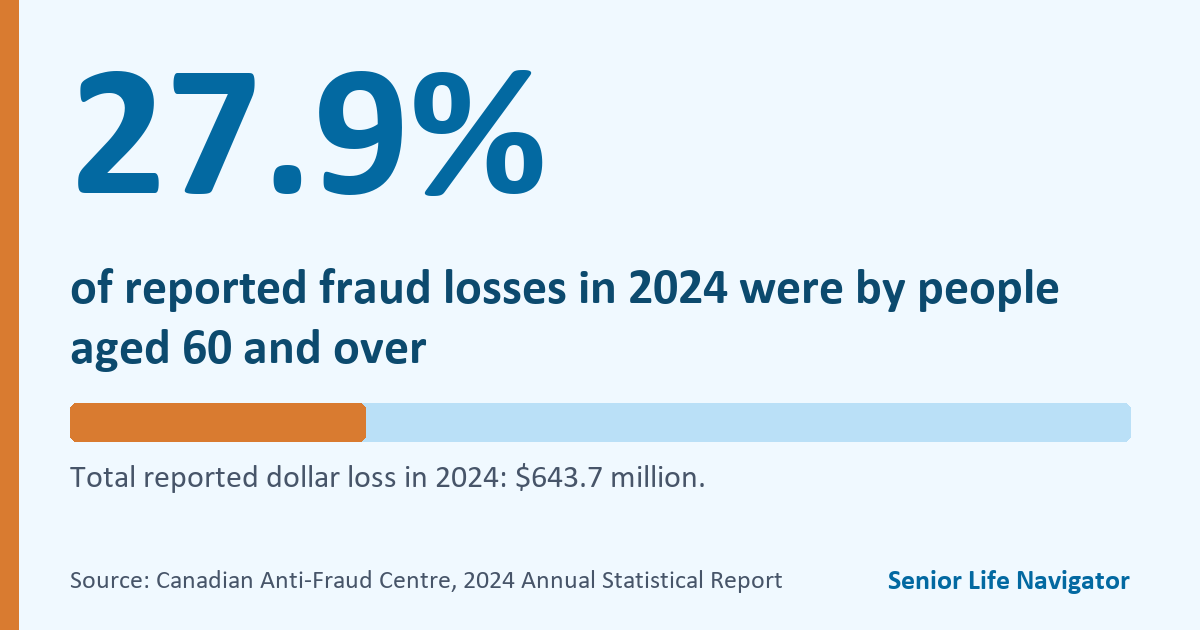
The Canadian Anti-Fraud Centre (CAFC) received more than 112,000 fraud reports in 2025, with reported losses above $704 million. Older adults carry a large share of that harm. In the CAFC’s 2024 statistical report, people aged 60 and over accounted for 27.9% of the dollars reported lost that year, out of a total of about $643.7 million. The same report notes that people over 50 tend to lose more money per fraud than younger people.
For context, 19.0% of Canadians (7.0 million people) were 65 or older at the 2021 Census, and 861,000 were 85 or older.

How to spot a grandparent scam or emergency phone scam: 5 warning signs
These come from how the CAFC describes emergency and grandparent scams, put in our own words.
- Pressure and threats. The caller demands action right away. Some say a “gag order” stops you from talking to anyone about it.
- Someone you trust, or someone with authority. The caller claims to be a loved one, or a police officer or lawyer acting for them. Typical stories are bail after an arrest, a car accident, hospital or ambulance fees, or being stuck abroad.
- Unusual payment. Cash that is picked up in person or sent by mail, cryptocurrency, or gift cards in the text and email versions. The CAFC points out that bail in Canada cannot be paid with cash or cryptocurrency.
- A new number or a broken phone. A message from a “family member” says their phone is damaged, gives a new number, and then asks for money.
- Caller ID that looks right. Numbers can be faked, so caller ID is not proof of who is calling. The grandparent version often reaches people on a home landline.
What to do if you get a suspicious call

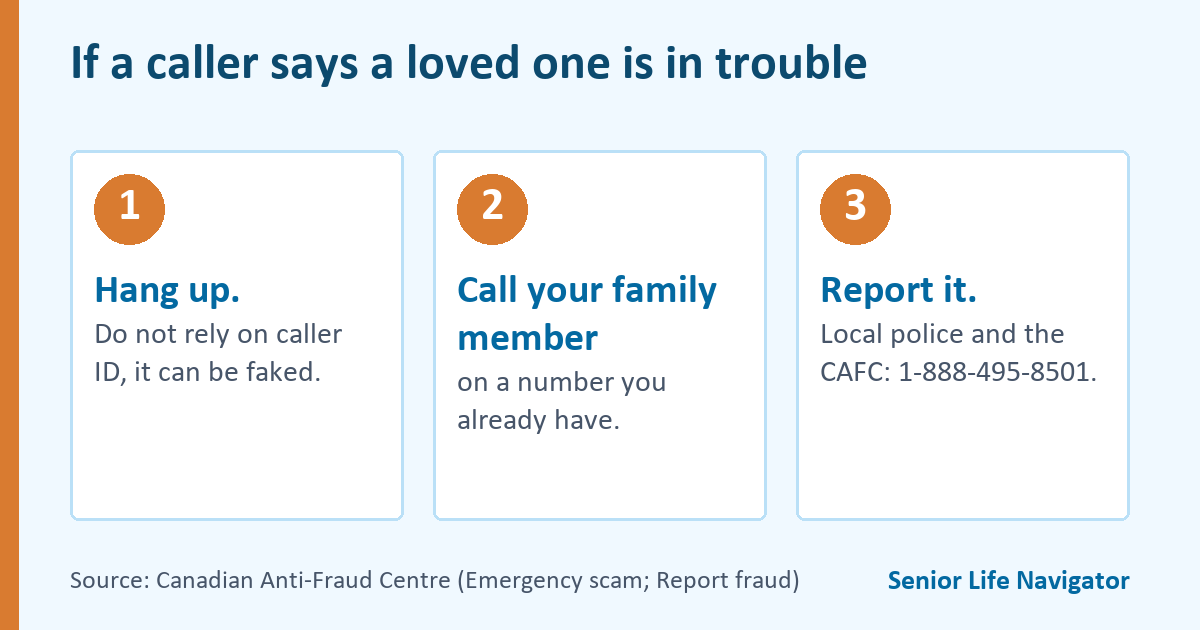
- Hang up and call your family member using a number you already have, not one the caller gave you.
- If the caller says they are police, hang up and look up your local police number from a reliable source.
- Think about what you share on social media and dating sites. Scammers use those details to target people and their relatives.
How to report a scam or fraud in Canada
Contact your local police, and report to the Canadian Anti-Fraud Centre (CAFC) online at reportcyberandfraud.canada.ca (you may report anonymously) or by phone at 1-888-495-8501, Monday to Friday, 10 am to 4:45 pm Eastern, closed on holidays.
What to do if you already sent money to a scammer
Do not be embarrassed. The CAFC asks victims to contact their local police as soon as possible and to report to the CAFC as well.

How we can help
We help older adults and their families feel more confident with phones, tablets and everyday technology. We also offer a free 30 to 45-minute scam awareness talk for seniors’ groups, churches, libraries and community centres in Waterloo Region, Kitchener, Cambridge and Guelph. We are a non-medical service and we do not give legal advice.
A first conversation is free, with no obligation. Call 519-804-6141 or email info@seniorlifenavigator.ca.
Sources
All sources were accessed on November 3, 2026.
- Canadian Anti-Fraud Centre, Emergency scam (warning signs and protective steps).
- Canadian Anti-Fraud Centre, Fraud Prevention Month 2026 (2025 reports and reported losses).
- Canadian Anti-Fraud Centre, 2024 Annual Statistical Report (age breakdown, 27.9% and $643,716,736 total reported dollar loss).
- Canadian Anti-Fraud Centre, Report fraud (how to report, phone hours).
- Statistics Canada, The Daily, April 27, 2022 (2021 Census, population aged 65 and older).
This article summarizes information published by the sources above, in our own words. Figures are as published, in Canadian dollars, and the CAFC counts only what is reported to it. It is general information, not legal or financial advice.